EN
EN



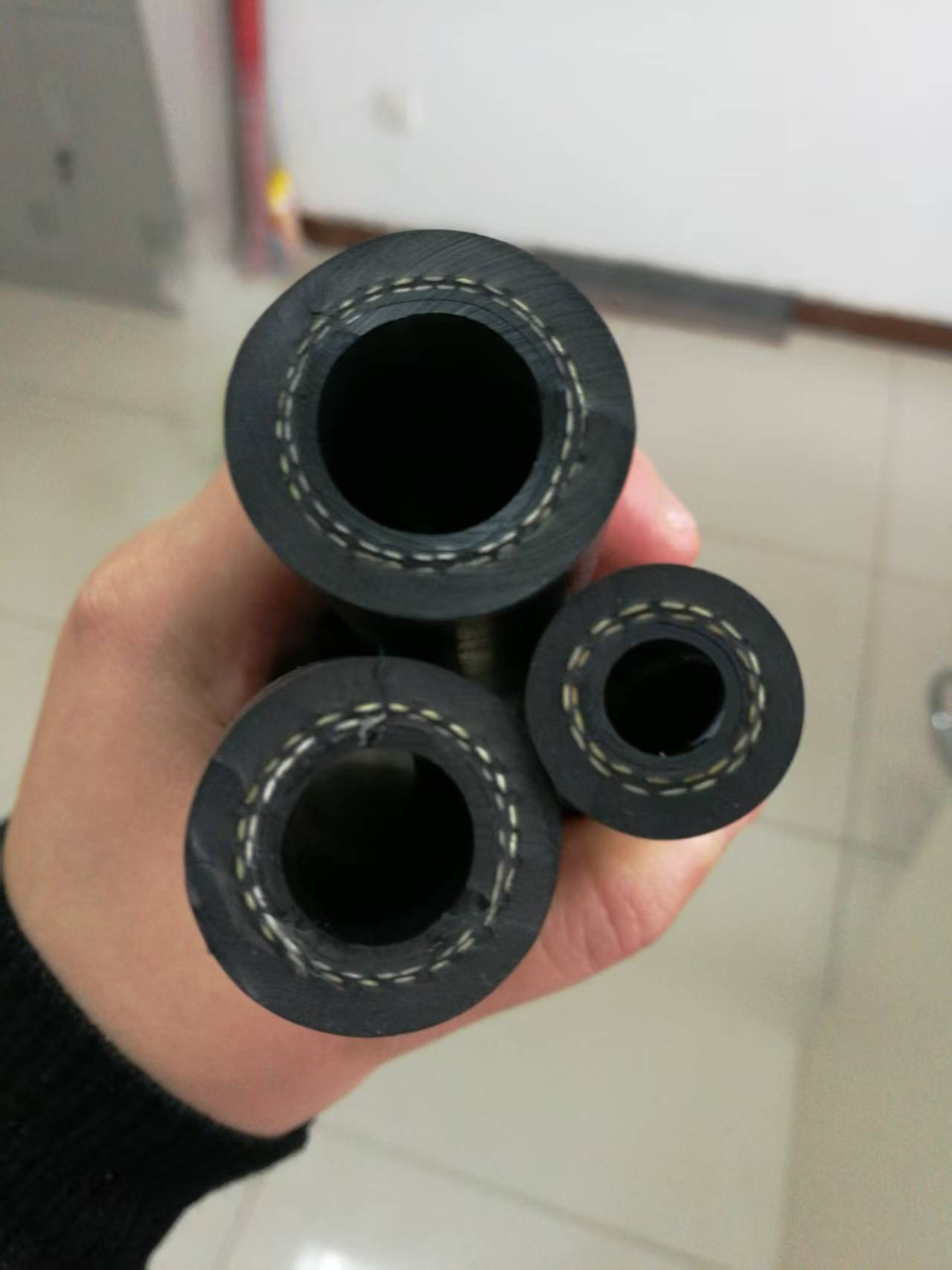
Understanding Heat Resistance in Automotive Air Conditioning Hose Performance
The Impact of Engine Bay Temperatures on Automotive Air Conditioning Hose Integrity
Engine compartments in modern vehicles often hit over 200 degrees Fahrenheit when driving around cities. Standard rubber hoses break down about 60 percent quicker in these hot spots compared to what happens in laboratory tests according to research from SAE International back in 2021. The problem gets worse over time as cracks start forming especially at hose connections where all the mechanical stress builds up. Car makers have responded by developing hoses made with multiple layers and special heat reflective materials inside them. These designs have been tested on actual fleets of vehicles and shown much better performance against the kind of extreme heat conditions we see every day on city streets.
How Heat Resistance Is Measured in Automotive Air Conditioning Hoses and Fittings
SAE J2064 stands as the gold standard in our field. It basically condenses five years worth of real-world service down to just eight weeks through intense testing. The process involves cycling through temperatures from freezing cold at -40 degrees Fahrenheit all the way up to scorching hot 257 degrees Fahrenheit, while maintaining constant pressure of around 350 pounds per square inch throughout each cycle. For a hose to pass muster according to manufacturer specs, it needs to keep roughly 85% of its initial tensile strength after all that punishment. Real world tests have shown something pretty telling though. When put through these extreme conditions, there's often a noticeable drop off in quality between genuine factory parts and those made by third parties. We're talking about performance differences upwards of 23%, which definitely raises questions about how reliable some cheaper alternatives actually are when subjected to such harsh environments.
Case Study: Failure of Standard EPDM Hoses Under Sustained High-Temperature Exposure
Researchers tracked taxi operations in Dubai for three years, and they noticed something interesting when temperatures regularly hit around 104 degrees Fahrenheit (that's 40 Celsius). The EPDM hoses started leaking after just 18 months of service. When they used thermal imaging cameras, they spotted some serious hot spots reaching as high as 284 degrees F (about 140 C) which is way beyond what these materials can handle normally. Looking closer at the failed hoses revealed several issues: their ability to withstand pressure dropped by almost half, there were visible cracks about 0.8 millimeters deep from ozone damage, and the sealing areas had compressed by roughly 12%. Switching to reinforced silicone hoses made a big difference though. These lasted nearly 2.4 times longer than before, and nobody saw any failures during subsequent checks, making this upgrade well worth the investment for fleet managers dealing with extreme heat conditions.
Rising Underhood Temperatures in Modern Vehicles and the Demand for Heat-Resistant Materials
Since 2015, turbocharged engines combined with hybrid battery systems have pushed underhood temperatures up about 17 degrees Fahrenheit (that's roughly 9.4 Celsius), reports WardsAuto. Because of this heat increase, modern car AC hoses need to handle sustained temperatures around 275 degrees Fahrenheit (or 135 Celsius). Only about 38 percent of parts on the market today can actually stand up to these conditions based on a recent 2023 industry check. Manufacturers are turning to advanced materials such as FKM fluoroelastomer for better performance. These materials show impressive results too, retaining around 94% of their flexibility even after sitting at scorching 300 degrees Fahrenheit (about 149 Celsius) for 1,000 straight hours during testing by original equipment manufacturers.
Comparative Analysis of Heat-Resistant Materials for Automotive Air Conditioning Hoses
Material Breakdown: EPDM, Silicone, and PTFE Hoses and Their Thermal Limits
EPDM rubber is still widely used, though it starts breaking down when temperatures hit around 248 degrees Fahrenheit (that's about 120 Celsius). And this becomes a real problem these days since engine compartments often get hotter than 257 F (or roughly 125 C). Silicone does better in the heat, staying stable all the way up to 392 F (200 C). But if we're talking about materials that can handle serious heat, nothing beats PTFE. This stuff can take temperatures as high as 500 F (260 C), which makes it perfect for those high performance cars or electric vehicles where heat tends to build up in specific areas.
Silicone Hoses for High-Temperature Applications: Flexibility and Longevity Benefits
Silicone works really well across a wide temperature range, going all the way down to -55 degrees Fahrenheit and up to as high as 400°F (-48°C to 204°C). What makes it so useful is how it keeps both its heat resistance properties while still remaining flexible enough for most applications. Even when things get pretty hot around 300°F (about 149°C), silicone can stretch up to 300% without breaking, which helps prevent those annoying stress fractures that happen when equipment vibrates constantly. Looking at some testing results, we find that after sitting at 350°F (around 177°C) for 1,000 straight hours, silicone holds onto about 92% of its original tensile strength. That's way better than regular rubber options which typically start getting brittle and cracking apart after similar exposure to heat.
PTFE vs. Rubber Hoses: Evaluating Temperature Resistance in Extreme Conditions
| Property | PTFE Hoses | EPDM Rubber Hoses |
|---|---|---|
| Max Continuous Temp | 500°F (260°C) | 257°F (125°C) |
| Flexibility at 300°F | 15% compression modulus | Crack initiation |
| Refrigerant Permeation | 0.05 g/m²/day | 2.1 g/m²/day |
| Service Life at 250°F | 8–10 years | 2–3 years |
PTFE’s laminated construction resists chemical degradation from modern R-1234yf refrigerants 63% more effectively than multi-layer rubber hoses. However, its rigidity and 38% higher cost limit widespread use to ultra-high-heat zones such as turbocharger interconnections.
Material Compatibility and Chemical Stability at Elevated Temperatures
Refrigerant and Oil Compatibility: How Chemical Interactions Affect Thermal Durability
Air conditioning hoses in cars need to hold up under some pretty tough conditions. They face refrigerants such as R-1234yf plus compressor oils while operating above 150 degrees Celsius. Silicone works well against swelling caused by synthetic PAG oils but tends to break down when coming into contact with ester based lubricants. According to research published by SAE last year, using fluorocarbon rubber (FKM) linings cuts refrigerant seepage by around one third compared to EPDM materials, which means these hoses last longer before needing replacement. At elevated temps, chemical absorption speeds up how polymers fall apart, creating tiny cracks even in materials that are supposed to withstand heat. This is why material selection matters so much for automotive manufacturers looking to improve durability.
Chemical Degradation as a Hidden Cause of Automotive Air Conditioning Hose Failure
When materials face both heat stress and chemical exposure, they tend to fail much sooner than expected. Take nitrile rubber for instance it becomes brittle at about four times the normal rate when subjected to repeated heating and cooling cycles while exposed to ozone, according to testing standards like ASTM D1149. The problem gets worse with common contaminants such as brake fluids and coolants getting into the mix. Looking at actual maintenance records from vehicle fleets, around one out of every five air conditioning hose replacements happens because of chemical damage instead of just being worn out by heat alone. That's why high quality hoses often feature multiple layers these days, especially those containing PTFE or FKM barrier materials which help keep harmful substances away from the sensitive inner parts of the hose assembly.
Engineering Selection Criteria for Automotive AC Hoses in High-Heat Environments
Balancing Thermal and Pressure Stress in Automotive Air Conditioning Hose Selection
With engine bays routinely exceeding 200°F, automotive air conditioning hoses face dual demands: resisting softening at high temperatures while enduring refrigerant pressures above 450 psi. Silicone excels in this balance, retaining over 75% of its compression strength at 250°F—outperforming traditional EPDM (SAE Thermal Materials Review 2023). Effective designs incorporate:
- Multi-layer construction with heat-reflective inner liners
- Stainless-steel reinforcement braids to prevent pressure-induced expansion
- Precision-molded fittings that minimize stress concentrations
OEM Testing Data: Real-World Performance of AC Hoses Under Combined Stresses
Automakers simulate desert driving conditions (120°F ambient, 85% humidity) over 1,000+ hours. Recent results show:
| Stress Type | OEM Hose Failure Rate | Aftermarket Average |
|---|---|---|
| Thermal Cycling | 12% | 34% |
| Pressure Surges | 8% | 29% |
| Combined Stresses | 18% | 61% |
These findings emphasize the value of SAE J2064 certification, which requires 250-hour endurance testing at 257°F with pressure spikes up to 650 psi.
Aftermarket vs. OEM Hoses: Do Aftermarket Options Meet Equivalent Heat Resistance Standards?
Although 73% of aftermarket suppliers claim parity with OEM specs, independent testing confirms only 41% meet minimum heat resistance thresholds. Top-performing alternatives use aerospace-grade PTFE liners and maintain 89% seal integrity after 1,500 thermal cycles (International Journal of Automotive Engineering 2022). Technicians should prioritize solutions with:
- Documented compliance with OEM thermal profiles
- Third-party validation under ASTM D380 protocols
- A continuous service rating of at least 200°F
This ensures reliable performance in today’s thermally aggressive powertrain environments.
Quality Assurance and Industry Testing Standards for Heat-Resistant Hoses
Durability Benchmarks for Quality Automotive Air Conditioning Components Under Thermal Cycling
Hoses must pass thermal cycling tests simulating repeated heating (up to 300°F) and cooling (-40°F), per SAE J2064. A 2023 SAE International study found EPDM hoses degrade 63% faster than silicone after 5,000 cycles. Key benchmarks include:
| Test Parameter | Benchmark Threshold | Failure Criteria |
|---|---|---|
| Tensile Strength Retention | ≥70% after 1,000 cycles | Cracking >1mm depth |
| Elongation at Break | ≥80% initial value | Visible refrigerant leakage |
| Ozone Resistance | No cracks after 500h @ 100°F | Brittleness or surface pitting |
Manufacturers validate performance using SAE J2238 pressure impulse testing, combining thermal stress with 750 psi operational loads.
ASTM and SAE Protocols for Testing Temperature Resistance in AC Hoses
SAE J2064 mandates 300-hour exposure at 257°F for R-134a systems, while ASTM D3800 assesses chemical stability under heat via infrared spectroscopy. Testing shows:
- Silicone retains 92% flexibility after 1,000 hours at 300°F, versus 45% for EPDM
- PTFE-lined hoses exhibit less than 0.5% refrigerant permeability at 350°F continuous
- Burst pressure must exceed 1,800 psi post-thermal aging (SAE J51 Section 6.4)
These standards ensure reliability in turbocharged platforms, where underhood temperatures now average 245°F—15% higher than in 2018 models.
FAQ
Q1: Why do automotive air conditioning hoses need to be heat resistant?
A1: Automotive air conditioning hoses need to withstand high underhood temperatures, which often exceed 200°F in modern vehicles. Heat-resistant materials prevent hose degradation, ensuring reliable operations and longevity.
Q2: What testing standards are used for measuring the performance of AC hoses?
A2: SAE J2064 is a key standard that simulates real-world service conditions, testing hoses rigorously under temperature cycling and pressure stress to ensure durability.
Q3: How does heat affect the integrity of standard EPDM hoses compared to silicone hoses?
A3: EPDM hoses start to degrade at elevated temperatures, often developing cracks and leaks. Silicone hoses, on the other hand, maintain flexibility and tensile strength much longer when exposed to high temperatures.
Q4: What material offers the highest heat resistance?
A4: PTFE offers the highest heat resistance, withstanding temperatures as high as 500°F, making it ideal for ultra-high-heat zones in performance vehicles.
Q5: Are aftermarket hoses as reliable as OEM hoses?
A5: While some aftermarket hoses claim equivalence to OEM standards, independent testing often shows a disparity in quality. Therefore, it's crucial to choose hoses with documented compliance to quality assurance standards.
Table of Contents
-
Understanding Heat Resistance in Automotive Air Conditioning Hose Performance
- The Impact of Engine Bay Temperatures on Automotive Air Conditioning Hose Integrity
- How Heat Resistance Is Measured in Automotive Air Conditioning Hoses and Fittings
- Case Study: Failure of Standard EPDM Hoses Under Sustained High-Temperature Exposure
- Rising Underhood Temperatures in Modern Vehicles and the Demand for Heat-Resistant Materials
- Comparative Analysis of Heat-Resistant Materials for Automotive Air Conditioning Hoses
- Material Compatibility and Chemical Stability at Elevated Temperatures
- Engineering Selection Criteria for Automotive AC Hoses in High-Heat Environments
- Quality Assurance and Industry Testing Standards for Heat-Resistant Hoses