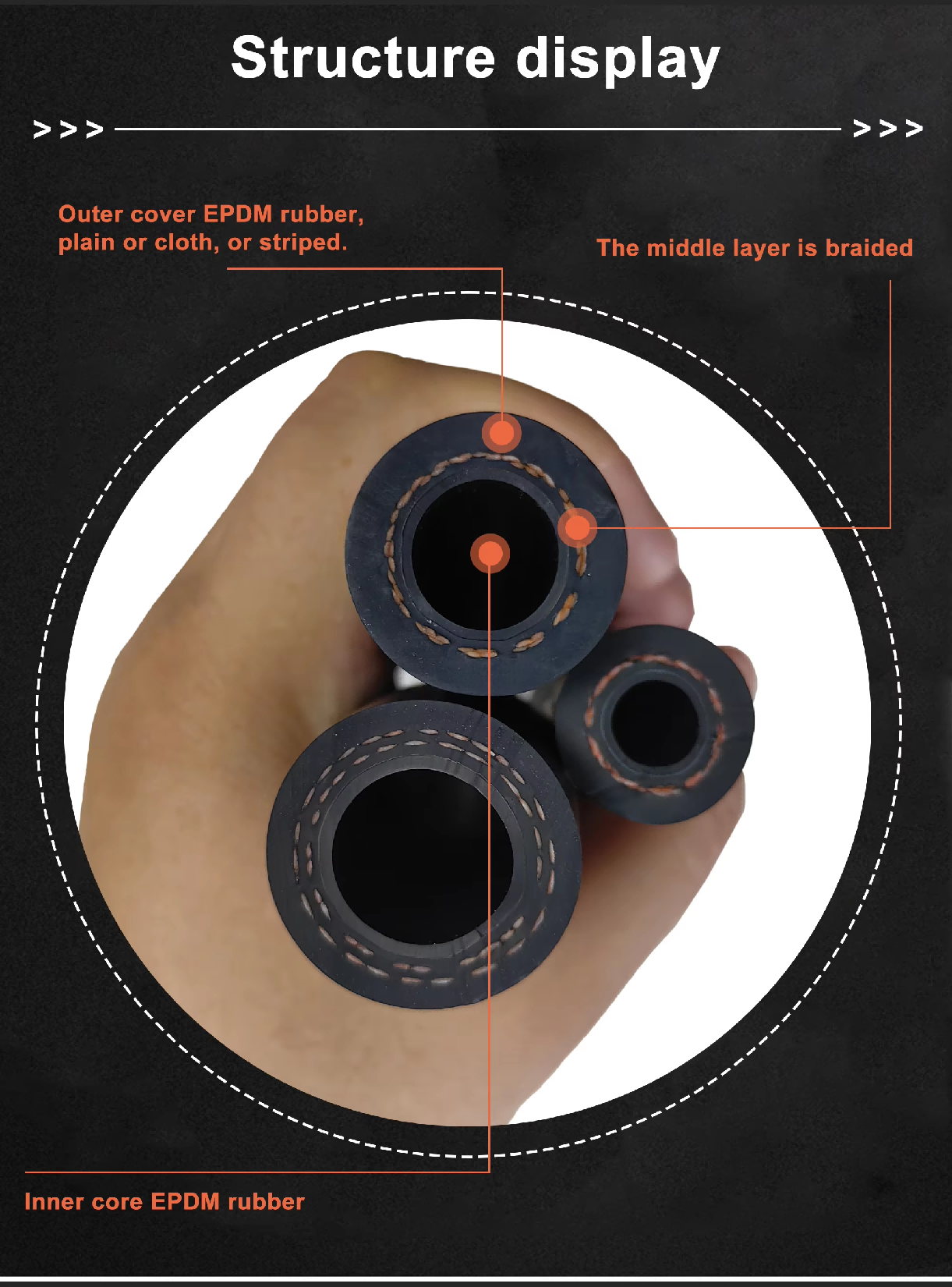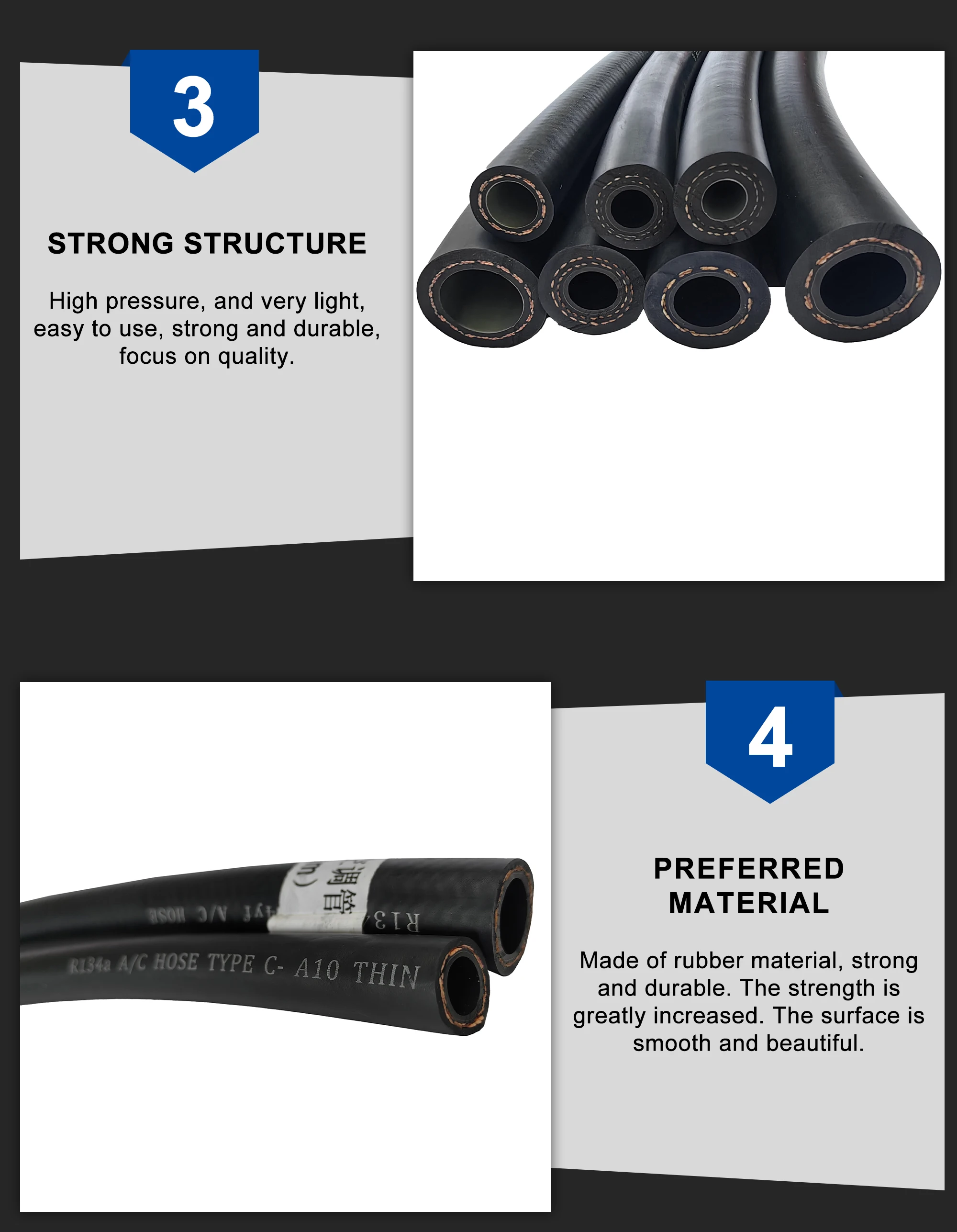
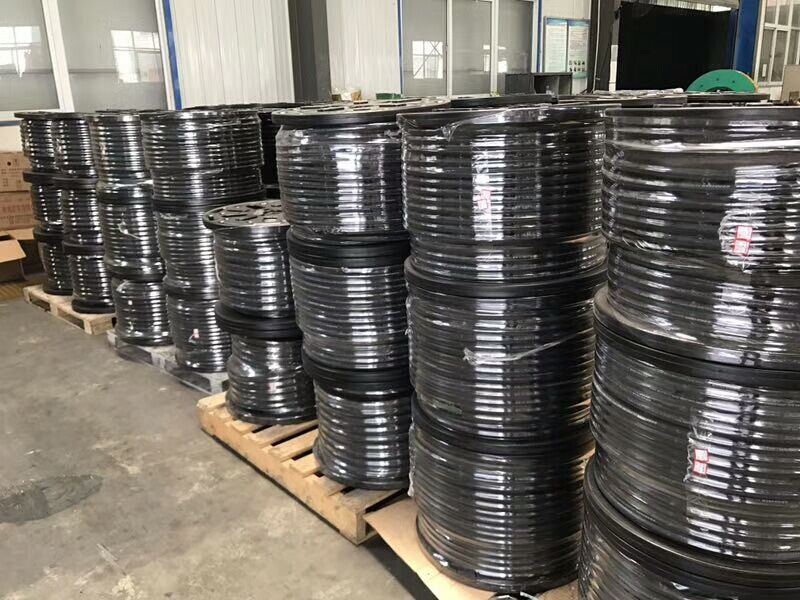
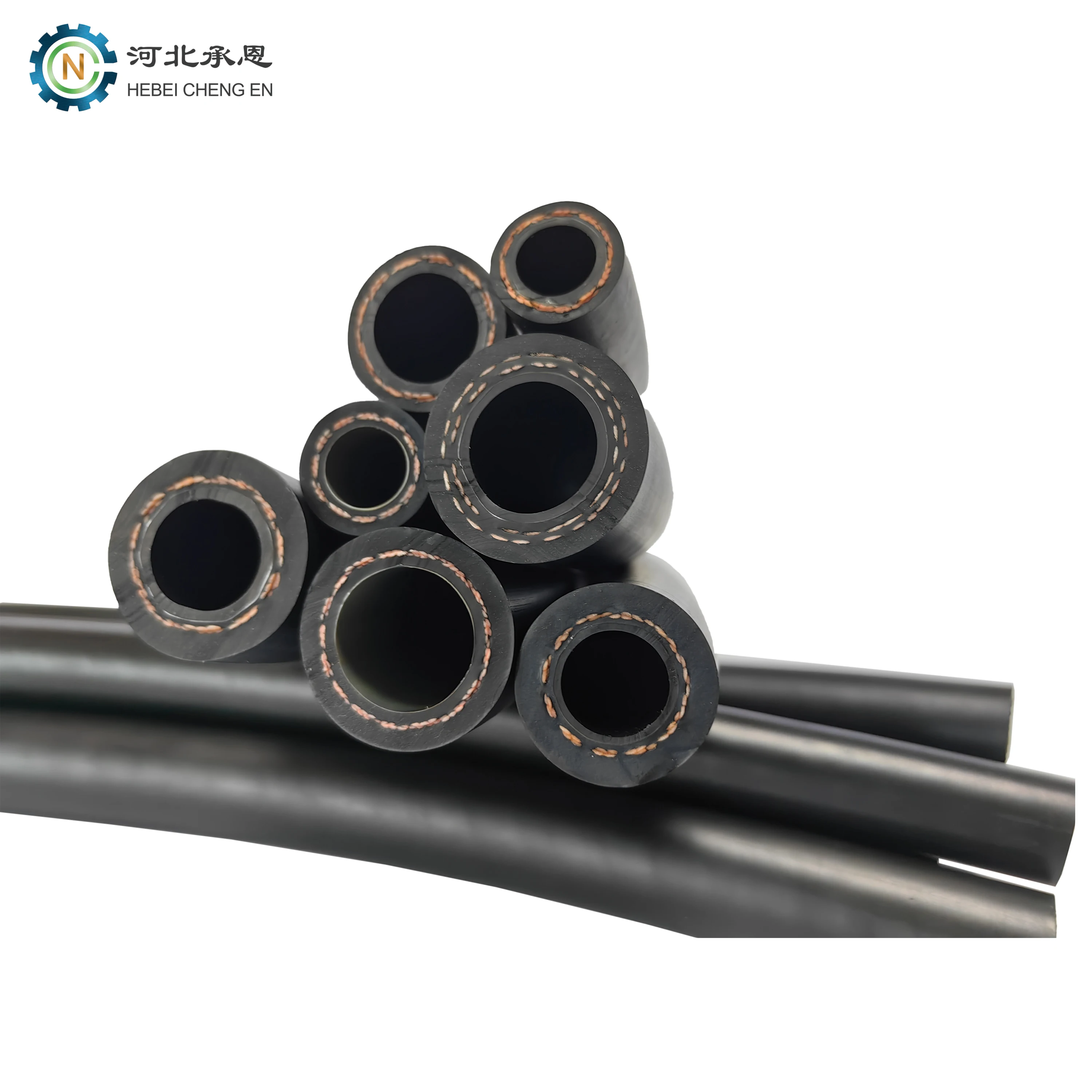
Automotive air conditioner hoses constitute engineered fluid transfer components specifically designed for vehicular refrigeration circuits, balancing performance requirements with the challenging environmental conditions of vehicle engine compartments. These hoses maintain critical functionality throughout the vapor compression cycle—transporting high-pressure superheated gas from compressor to condenser, high-pressure liquid to expansion devices, and low-pressure vapor back to the compressor. Technical construction typically involves multi-layer architecture beginning with an inner tube of specialized polymer (commonly nylon) providing minimal refrigerant permeability, intermediate reinforcement layers of synthetic textile or steel wire braiding for pressure containment, and external protective covers resistant to ozone, abrasion, and underhood fluids. Performance validation includes extensive testing for burst pressure (typically 4-5 times working pressure), impulse fatigue resistance exceeding 100,000 cycles, and permeability rates measured against SAE J2064 standards. Real-world application challenges include maintaining seal integrity despite constant engine vibration, resisting degradation from temperature extremes (-40°C to 150°C), and providing sufficient flexibility for installation in tightly packaged modern engine compartments. A documented case from automotive manufacturers shows how optimized hose routing with specific bend radius requirements improved system efficiency by 7% through reduced pressure drop. Connection systems employ various standardized fittings including O-ring face seal, bead-lock, and SAE flare configurations, each requiring specific crimping procedures and torque specifications. Maintenance protocols emphasize periodic visual inspection for signs of external cracking, oil seepage at fittings, or abrasion damage from contact with adjacent components. Our product range includes application-specific solutions for hybrid and electric vehicles where AC systems additionally serve battery and power electronics cooling, requiring enhanced materials compatible with new refrigerant formulations. For technical specifications and application engineering support regarding automotive air conditioner hoses, we provide comprehensive resources including selection guides, installation procedures, and compatibility information.