EN
EN



The Science Behind Heat Generation During Braking
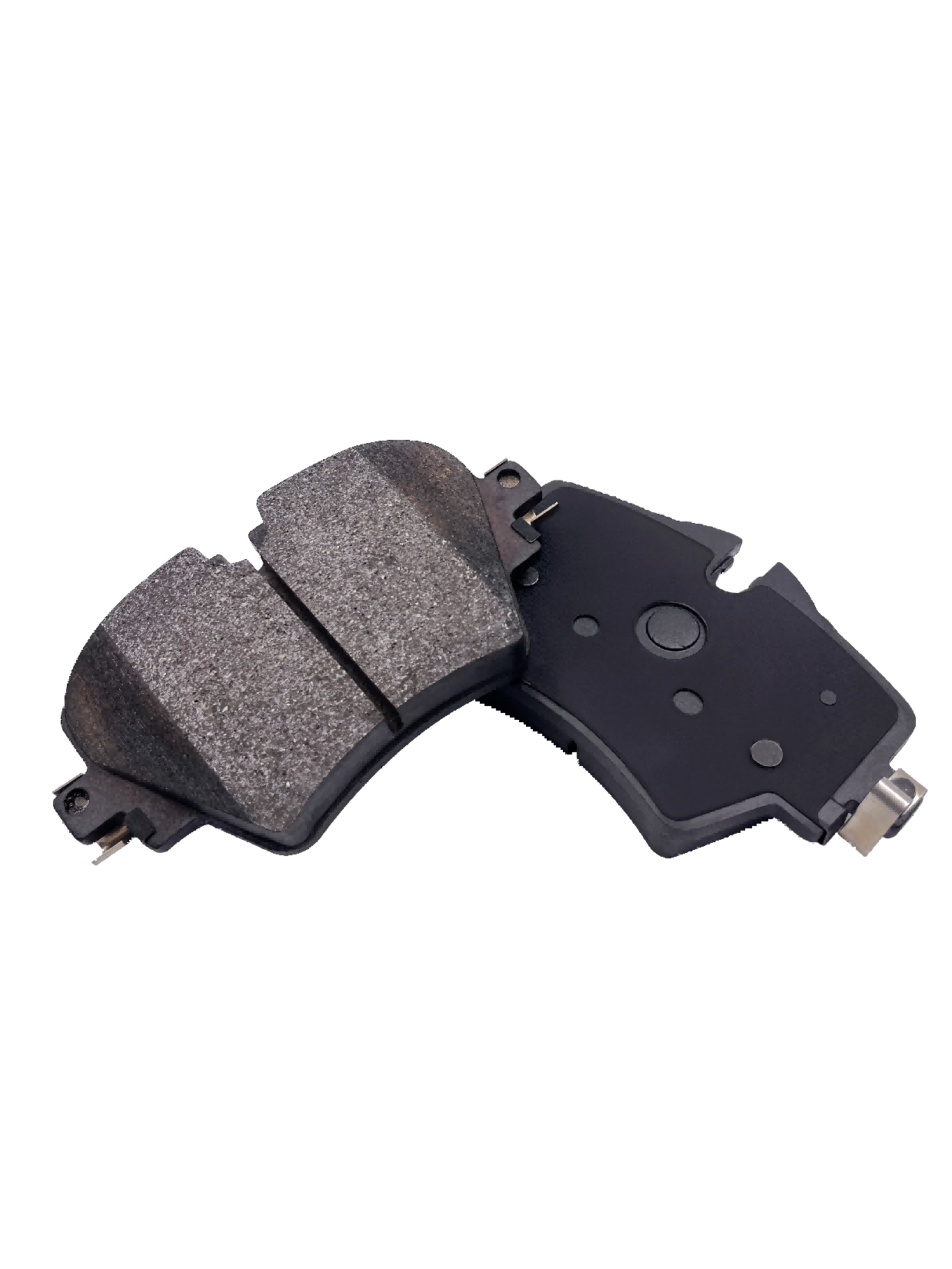
Braking transforms kinetic energy into heat via friction between components. Stopping abruptly at around 60 miles per hour often causes rotor temps to spike past 200 degrees Celsius, which equals roughly 392 Fahrenheit on the Fahrenheit scale. Things get really intense during situations such as descending steep mountains or hauling heavy loads where continuous braking generates extreme heat exceeding 650 degrees Celsius (about 1,202 Fahrenheit). At these temperatures, brake pads start to degrade significantly under pressure. Managing this heat buildup remains critical for keeping brakes working properly and avoiding catastrophic failures down the road.
Material Composition and Its Role in Thermal Resistance
Premium brake pads use advanced materials designed for superior heat dissipation:
- Ceramic composites incorporate copper fibers that rapidly disperse heat, maintaining stability up to 800°C (1,472°F)
- Semi-metallic pads blend steel fibers with graphite, balancing thermal conductivity (optimal range: 38°C–371°C) and noise control
- Organic formulations rely on glass fibers and rubber but begin degrading above 500°C (932°F) due to binder burnout
These materials reduce thermal expansion by 23% compared to budget options, preserving consistent pad-to-rotor contact under stress (Friction Science Journal).
Performance Benchmarks: Temperature Thresholds of Premium Brake Pads
| Material | Max Operating Temp (°C) | Fade Resistance | Heat Dissipation Rate |
|---|---|---|---|
| Ceramic | 800 | Excellent | 18°C/sec |
| Semi-Metallic | 700 | Good | 12°C/sec |
| Organic | 500 | Moderate | 6°C/sec |
Recent innovations like para-amid composites—highlighted in the 2024 Brake Material Innovations Report—can withstand 900°C (1,652°F) while maintaining stable friction coefficients (±0.02 variance). This enables reliable stopping power even after 10 consecutive panic stops from highway speeds.
Brake Fade Due to High Temperatures: Causes and Safety Implications
Brake fade occurs when excessive heat compromises a pad’s ability to generate consistent friction, increasing stopping distances and pedal effort—especially dangerous during emergencies or heavy-load operation.
Understanding Brake Fade: How Excessive Heat Reduces Stopping Power
During aggressive braking, temperatures reach 500–700°F, causing organic and semi-metallic materials to degrade. At these levels, gas forms between the pad and rotor, reducing friction by up to 30% (Brake & Frontend, 2024). While ceramic pads resist this better thanks to reinforced bonding agents, all materials face limits under sustained loads.
Real-World Risks of Brake Fade in High-Speed or Mountain Driving
Extended braking on steep descents or while towing builds cumulative heat. For example, a fully loaded truck descending a 7% grade over two miles can push rotor temps to 900°F, overwhelming standard pads and extending stopping distances by 150–200 feet.
| Driving Scenario | Thermal Challenge | Safety Implication |
|---|---|---|
| Mountain descent | Sustained braking over miles | Reduced pedal responsiveness |
| High-speed emergency stop | Rapid heat generation in seconds | Increased risk of collision |
| Towing heavy loads | Extended brake application time | Accelerated pad glazing and fade |
According to Brake & Frontend, pairing high-temp brake pads with ventilated rotors is critical for sustaining friction stability. Drivers in demanding environments should choose pads rated for at least 600°F and allow cooling intervals during prolonged braking.
Friction Coefficient Stability Across Temperature Ranges
Why Friction Drops at Extreme Temperatures
Above 600°F (316°C), brake pads lose grip through three key mechanisms:
- Organic material vaporization: Resins gasify, creating insulating layers
- Metallic oxidation: Iron oxide forms low-friction surfaces on semi-metallic pads
- Friction material glassing: Melted surface compounds reharden into slick coatings
This degradation reduces stopping force by 25–40% during continuous heavy braking.
Engineering Solutions for Consistent Braking Performance
To combat thermal fade, manufacturers employ:
- Ceramic reinforcement fibers: Maintain integrity up to 1,200°F (649°C)
- 3D cooling channels: Lower pad surface temps by 180°F (82°C) vs. traditional designs
- Gradient density materials: Layered composites sustain optimal friction from 200°F to 900°F (93°C to 482°C)
Advanced additives like aramid particles help maintain a friction coefficient (μ) of 0.38–0.42 across wide temperature ranges, outperforming conventional materials (0.30–0.45 μ).
Test Data on Friction Stability in Leading Brake Pad Materials
Modern formulations show significant improvements in thermal consistency:
| Material Type | Stable COF Range | Max Operating Temp | Thermal Decay Rate |
|---|---|---|---|
| Ceramic Hybrid | 0.39-0.43 μ | 1,025°F (552°C) | 0.008 μ/°F |
| Sintered Metal | 0.41-0.45 μ | 1,200°F (649°C) | 0.012 μ/°F |
| Organic Composite | 0.35-0.47 μ | 750°F (399°C) | 0.025 μ/°F |
A 2024 materials study found optimized ceramic-metallic blends maintained μ within 0.02 of baseline through 15 consecutive 60-mph panic stops. These next-gen pads endure 45% more heat cycles before performance declines compared to earlier versions.
Ceramic vs. Semi-Metallic vs. Organic Brake Pads: Thermal Performance Compared
Ceramic Brake Pads and Temperature Tolerance: Strengths and Limits
Ceramic brake pads offer strong heat resistance and quiet operation, remaining stable up to 900°C (1,652°F) thanks to their ceramic fiber and copper-flake composition. They maintain friction better than organic pads at high temperatures, but lower thermal conductivity makes them less effective for repeated heavy braking in mountain descents or towing.
Comparative Analysis Under Sustained Thermal Load
| Brake Pad Type | Max Operating Temp | Cold-Bite Friction (μ) | High-Temp Friction Drop |
|---|---|---|---|
| Organic | 350°C (662°F) | 0.35 | 25–30% |
| Semi-Metallic | 800°C (1,472°F) | 0.40 | 12–15% |
| Ceramic | 900°C (1,652°F) | 0.38 | 8–10% |
Semi-metallic pads excel in heat dissipation—ideal for frequent hard stops—while organic pads degrade quickly above 350°C. Ceramic provides a balanced solution but loses effectiveness if rotor temperatures exceed its threshold.
Cost vs. Performance: Do Expensive Pads Deliver Better Heat Resistance?
Though ceramic pads cost 35–50% more upfront than semi-metallic variants, they last longer—typically 50,000–70,000 miles—reducing replacement frequency. Organic pads suit light urban driving but wear faster under thermal stress, requiring 2–3 times more replacements. In extreme conditions, premium ceramics reduce fade risk by 40%, justifying their higher initial cost (Ponemon 2023).
Long-Term Wear and Degradation from Repeated Heat Exposure
Brake Pad Glazing from Excessive Heat: Formation and Effects
Repeated overheating causes glazing—a smooth, glass-like layer forms when binding resins liquefy above 600°F (315°C) and then harden. This reduces stopping power by 18–25% in tests and increases stopping distances by 4–7 car lengths at 60 mph. Oxidation and molecular breakdown further weaken pad structure, accelerating wear (Material Degradation Mechanisms Study, 2024).
Wear Rate of Brake Pads Under Thermal Stress: What Shortens Lifespan?
Sustained high heat permanently alters pad composition:
- Organic pads lose 40% mass after 10 cycles at 750°F (400°C)
- Semi-metallic formulations crack three times faster than ceramic equivalents
- Friction material porosity drops by 32%, impairing heat dissipation
Pads used in mountainous terrain wear 50% faster than those in city driving due to prolonged thermal exposure. Advanced cooling channels and heat-resistant shims help mitigate these effects.
Maintenance Strategies to Minimize Heat-Induced Wear
- Inspect pad thickness every 12,000 miles (replace if ≤3mm)
- Avoid riding brakes downhill—use engine braking instead
- Clean components annually to prevent debris-related overheating
- Replace warped rotors promptly to avoid uneven heat distribution
Proactive maintenance extends pad life by 30–60%, according to industry data, significantly lowering the risk of brake failure.
FAQ Section
What causes brake pads to generate heat?
Brake pads generate heat through the friction produced when they press against the rotors to slow down a vehicle.
Why do high temperatures affect brake pad performance?
High temperatures can degrade the materials in brake pads, reducing their ability to generate friction effectively and increasing stopping distances.
How can I prevent brake fade on steep descents?
Utilize engine braking and select heat-resistant brake pads to help manage thermal challenges during steep descents.
What are the benefits of ceramic brake pads?
Ceramic brake pads offer high heat resistance and quieter operation, making them ideal for sustained braking applications.
Table of Contents
- The Science Behind Heat Generation During Braking
- Material Composition and Its Role in Thermal Resistance
- Performance Benchmarks: Temperature Thresholds of Premium Brake Pads
- Brake Fade Due to High Temperatures: Causes and Safety Implications
- Friction Coefficient Stability Across Temperature Ranges
- Ceramic vs. Semi-Metallic vs. Organic Brake Pads: Thermal Performance Compared
- Long-Term Wear and Degradation from Repeated Heat Exposure
- FAQ Section