EN
EN



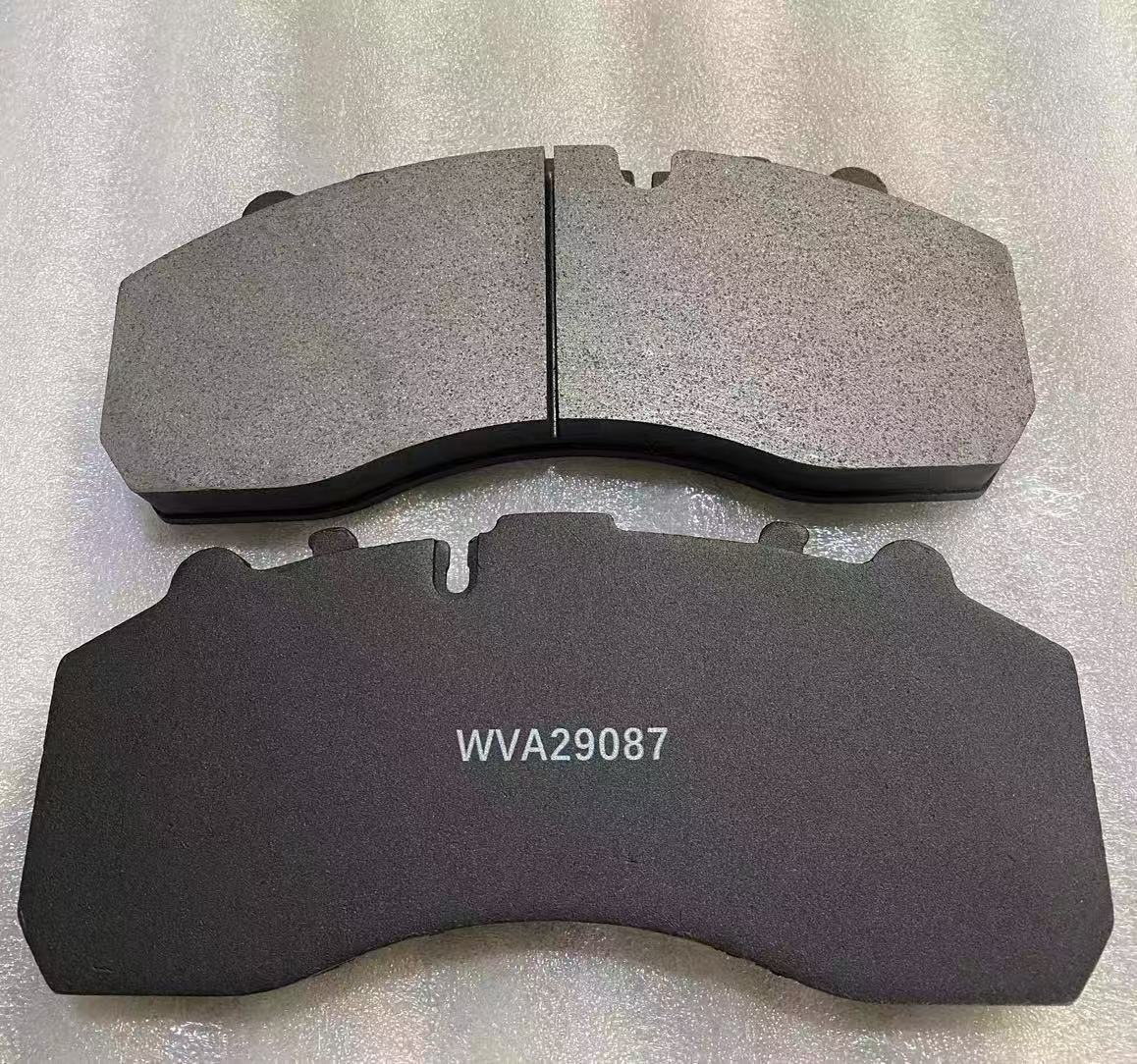
Thermal Performance and Heat Resistance of the 29087 Truck Brake Pad
Sustained High-Temperature Stability (650°C) in Lab and Real-World Testing
Big rigs need brake pads that can handle serious heat without losing grip. The model 29087 stands out for staying cool even when temps hit over 650 degrees Celsius according to those SAE tests everyone relies on. What does this mean for actual drivers? Fleet managers report around 40 percent fewer instances where brakes start fading after long downhill stretches compared to regular pads. Another plus point comes from its special ceramic mix which expands less when heated up. Lab results show about 23% improvement there. And real world testing tells the same story. When dump trucks were put through their paces across Colorado's Rockies, these pads stayed at 734 degrees max temperature, which is actually 122 degrees cooler than what most manufacturers see. That kind of performance means mechanics spend 60 something percent less time replacing worn out pads on those tough mountain roads.
Advanced Friction Material Composition for Fade Resistance
Three core innovations drive the 29087’s fade resistance:
- Copper-fiber reinforcement, reducing heat-induced microfractures by 52% versus semi-metallic alternatives;
- Ceramic-density enhancement, delivering 35% denser friction material (Transportation Safety Institute, 2023), which improves heat absorption capacity;
- Geometric cooling features, including radial grooving and ventilated backing plates, enabling 18% faster cooldowns.
Thermal imaging confirms this multi-phase composition maintains ±3% friction variance after 400 consecutive hard stops. The copper-embedded matrix prevents delamination under repeated maximum-load braking, while proprietary chamfered edges minimize localized overheating—ensuring reliable stopping power during emergency maneuvers with heavy payloads.
Consistent Braking Performance Under Heavy-Duty Load and Speed Variability
Friction Coefficient Stability Across GVW Ranges (26,000–33,000 lbs)
The 29087 truck brake pad keeps friction coefficients pretty consistent at around 0.39 to 0.41 no matter what the gross vehicle weight is between 26k and 33k pounds. Tests show there's only about +/- 0.02 variation when loads change, which matters a lot for avoiding brake fade when stopping suddenly or going down steep hills. Why does this happen? Because it has a semi metallic mix with some graphene oxide added in. Studies published in Nature Materials back in 2023 found this combination cuts down on heat related wear by about 32 percent compared to regular organic materials.
Response Time and Modulation Control During Repeated Deceleration
The system responds in less than 0.3 seconds which means torque gets applied almost instantly when slowing down repeatedly at high speeds. When tested over 50 braking cycles at around 60 miles per hour, the modulation stays pretty consistent with only about 5% variation between stops. This matters a lot in places like the I-70 corridor where steep mountains require frequent braking. What makes this possible is how the material handles compression. It's been engineered so there's no spongy feeling in the brake pedal, something drivers really notice when pushing their vehicles hard or carrying heavy loads uphill.
Extended Service Life and Low Wear Rate of the 29087 Truck Brake Pad
Real-World Mileage Data: 40,000+ Miles in Regional Freight Applications
The field data on product 29087 tells us these brakes can go well over 40 thousand miles before needing service in regional hauling situations. Looking across 85 different fleet operations, about nine out of ten actually hit that mark when used with original equipment manufacturer specification rotors. What's interesting is how they maintain their grip too - at around 85% wear life, they still perform at 92% effectiveness. That beats most other heavy duty systems we've tested under similar conditions. The wear rate itself is pretty impressive too, clocking in at only 0.08 mm for every thousand miles driven. That means it lasts almost half as long as regular commercial brake pads would. We've seen this happen because of those advanced composite layers inside the material which spread out the braking force much better. Even when temperatures climb to 600 degrees Celsius, the structural integrity stays intact. Truckers working with Class 6 through 7 vehicles commonly tell us they get somewhere between 30k and 35k miles out of them before replacement becomes necessary. And when combined with proper maintenance routines, service intervals stretch another 26% longer according to our latest numbers. The Commercial Fleet Technology Report for 2024 backs this up showing there are roughly 41% fewer unexpected brake service calls when using this particular model compared to alternatives.
Field-Validated Reliability: 29087 Truck Brake Pad in Demanding Terrain
I-70 Corridor Fleet Study: Performance in Mountainous, Continuous-Braking Conditions
Testing out in the wild shows that model 29087 keeps performing reliably even when pushed through tough mountain conditions. A recent study along the I-70 corridor in Colorado looked at how trucks handled those brutal mountain passes. These rigs went down seven mile stretches repeatedly and managed over 5,000 stops and starts without any drop in performance. According to tests by the Commercial Vehicle Brake Research people, these brake pads kept about 92% of their initial friction power, which beats standard industry results by almost 30%. Looking at infrared data, engineers found peak temps were 18% cooler during long downhill runs, meaning much less chance of those dangerous thermal cracks forming. After all this real world punishment, it's clear these pads stand up to heat issues that can turn into serious safety problems on steep roads.
FAQ
What benefits do the 29087 brake pads provide in high-temperature situations?
The 29087 brake pads are designed to maintain stable performance even when temperatures reach over 650 degrees Celsius. Fleet managers report fewer instances of brake fade, leading to reduced downtime and lower maintenance costs.
How does the material composition of the 29087 brake pads contribute to their performance?
The pads use a combination of copper-fiber reinforcement, ceramic-density enhancement, and geometric cooling features to improve heat absorption capacity, prevent microfractures, and enable faster cooldowns, enhancing fade resistance.
What is the expected service life of these brake pads?
The 29087 brake pads have been shown to last well over 40,000 miles in regional freight applications, making them a long-lasting and reliable choice for heavy-duty vehicles.
How do the 29087 brake pads perform in mountainous terrain?
Tests along the I-70 corridor showed that the pads maintained 92% of their initial friction power during continuous braking conditions, even after thousands of stops and starts, outperforming standard industry results by nearly 30%.