EN
EN



The Thermal Fade Problem in High-Frequency Braking
Brake fade poses serious safety risks when brakes are used repeatedly, particularly in city traffic where cars constantly stop and start, or when descending steep mountains. The problem happens because too much heat builds up on the brake discs, which makes them work far less effectively than normal. At around 300 degrees Celsius, the material on the brake pads starts changing physically, reducing how well they grip against the disc surfaces. Standard solid brake discs just aren't good at getting rid of all that heat fast enough, so the whole system gets progressively hotter with each brake application. After several stops in a row, braking power might actually fall by more than half, meaning drivers need to press down much harder on the brake pedal to achieve the same slowing effect. What's worse, this kind of overheating doesn't just make cars take longer to stop it also creates erratic braking responses that make controlling the vehicle difficult. For those who tow heavy trailers or drive performance cars regularly, continuous stress can send disc temperatures past 600 degrees Celsius, causing faster wear and making warped rotors almost inevitable.
How Ventilated Brake Discs Solve Heat Buildup Through Intelligent Design
Internal Vane Geometry and Convective Airflow Optimization
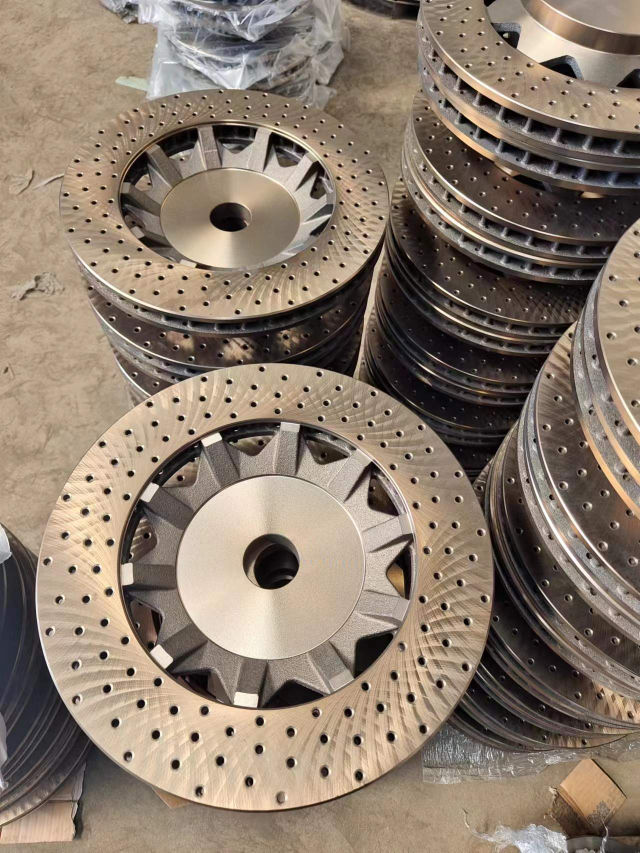
The ventilated brake discs work against heat buildup thanks to those internal vanes that have been carefully designed to boost convective cooling. When the disc spins around, these little channels actually suck in air from the surroundings right through the middle part of the disc, helping carry off all that unwanted heat from where it's created at the friction points. Some studies using computational fluid dynamics found that when they tweak those vane angles just right, the amount of air flowing through goes up about 30 percent, which means lower temperatures at their hottest moments. There are also biomimetic designs out there inspired by how nature handles cooling problems. These designs cut down on thermal stress by roughly 15% when someone is doing a lot of repeated braking. This makes sense because it follows basic physics principles, so manufacturers keep looking into these kinds of solutions for better performance.
Ventilated vs. Solid Brake Disc: Measured Thermal Performance Under Realistic Load Cycles
Testing done in conditions similar to city driving shows that ventilated brake discs get rid of heat about 40 percent quicker compared to regular solid discs. When cars stop repeatedly from 60 to 0 mph, these ventilated brakes keep their grip consistent even after doing this 15 times in a row. Regular solid discs start losing effectiveness by around 22% because they just can't handle all that heat buildup. Looking at how these discs are built explains why: ventilated ones stay roughly 150 to 200 degrees Celsius cooler when pushed hard for long periods. This temperature difference makes all the difference in maintaining reliable stopping power, especially since managing heat is what really determines how safe a vehicle remains during those critical moments.
Proven Performance Benefits of Ventilated Brake Discs in Demanding Scenarios
Urban Stop-and-Go Driving: Preventing Cumulative Heat Soak
Stop-and-go traffic in busy urban areas really taxes brakes, leading to serious heat buildup over time. The solution? Ventilated brake discs with those internal vane structures inside them help cool things down faster through better air circulation. Tests show these ventilated models actually retain about 40 percent less heat than regular solid discs when pushed hard. For drivers stuck in traffic jams all day long, this makes a real difference. Brake fade becomes less of a concern too, dropping around 25% according to measurements taken during long city drives. What does that mean practically? More consistent stopping power without that dreaded spongy feel developing in the brake pedal, even after hours of constant braking in heavy congestion situations.
Mountain Descents and Heavy-Duty Towing: Maintaining Consistent Brake Disc Efficiency
When driving down long hills or pulling heavy loads, brakes get subjected to serious heat buildup over time. Ventilated disc systems stay about 20 degrees cooler during extended use compared to standard discs, and they release heat around 35% quicker too. This makes all the difference when climbing those steep mountain passes where brake failure would be dangerous. The better cooling helps keep the friction levels stable so drivers can actually control their speed properly, not just when empty handed but especially when loaded to capacity with cargo or passengers.
Enhanced Safety, Predictability, and Driver Confidence with Ventilated Brake Discs
Brake discs with ventilation holes really boost road safety because they stop those annoying brake fade issues when things get intense on the road. The way these discs cool down keeps the friction between brake pads and rotors steady, so drivers can count on their brakes working properly whether they're coming down a steep mountain road or need to slam on the brakes suddenly. Most drivers notice better pedal feel and don't have to worry about sudden increases in stopping distance that happen so often with regular solid discs when they overheat. Less brake fade means drivers aren't constantly adjusting how hard they press the pedal during long trips, which cuts down mental stress and tiredness behind the wheel. Trucking companies especially appreciate this reliability since it leads to fewer accidents and repairs, plus saves money on insurance premiums. Plus, these ventilated discs last longer because they handle heat better, making them essential parts of today's vehicles for anyone who cares about staying safe on the road.
FAQ
What is brake fade?
Brake fade refers to the reduction in braking power and effectiveness due to overheating of brake components, particularly within high-frequency stopping scenarios.
How do ventilated brake discs differ from solid brake discs?
Ventilated brake discs have internal channels that promote air circulation, which helps dissipate heat more effectively compared to solid brake discs.
Why are ventilated brake discs important for high-frequency braking?
They offer superior heat dissipation, ensuring consistent braking performance and reducing the risk of brake fade even in demanding conditions like city traffic, mountain descents, and heavy-duty towing.