EN
EN



Pressure & Structural Integrity: Burst Resistance and Fatigue Performance
Burst Pressure Retention Under Dynamic Load Conditions
Car AC hoses deal with all sorts of pressure changes and vibrations day in and day out. Good quality hoses actually go way beyond what's required, often handling pressures 30 to 50 percent higher than minimum standards. This means they can stand up to sudden surges reaching around 800 psi without failing. Manufacturers test these hoses extensively too, running simulations where compressors kick in and roads shake things up just like real driving conditions. Take the Galaxy 4826 model as an example. After putting it through 5,000 hours of pulsation tests (and third parties checked this too), it only deformed less than 2%. That kind of durability stops those nasty refrigerant leaks we all dread, which typically cost about $740 to fix according to the Mobility Repair Index from last year.
Multi-Layer Reinforcement Architecture for Flex Fatigue Resistance
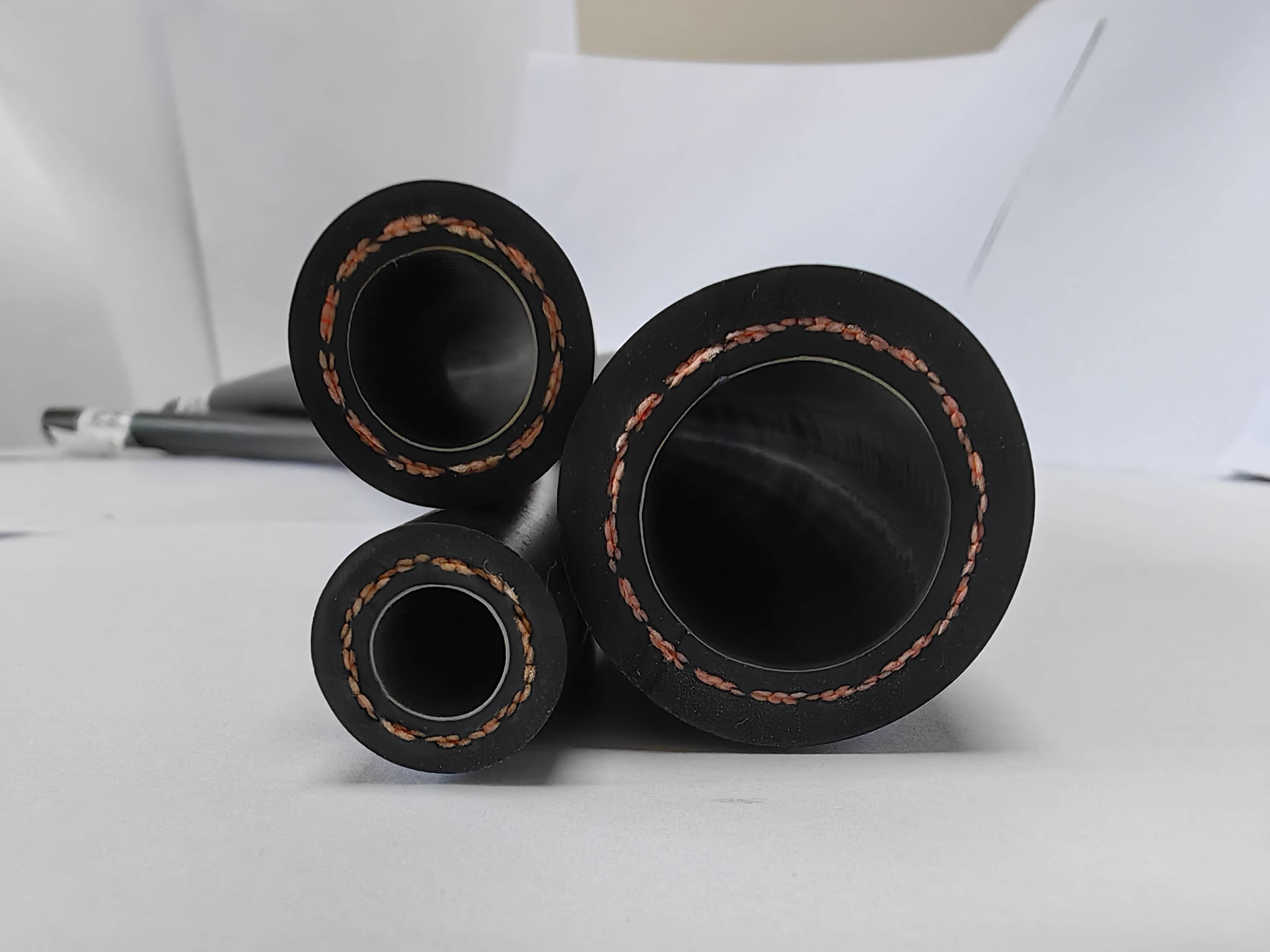
Repeated bending in tight engine compartments causes micro-cracks in single-layer hoses. Advanced triple-layer construction mitigates this:
| Layer | Function | Fatigue Resistance Benefit |
|---|---|---|
| Inner EPDM Tube | Refrigerant containment | Prevents permeation during flexing |
| Aramid Fiber Braid | Tensile reinforcement | Distributes stress across surface |
| Abrasion-Resistant Cover | Environmental protection | Blocks external crack initiation |
This architecture extends flex endurance by 300% versus standard hoses—surviving >1 million 90° bend cycles without failure. Lab data confirms multi-layer designs reduce flex-induced failures by 87% in high-vibration applications like commercial fleets.
Thermal & Environmental Resilience Across Real-World Operating Ranges
Automotive AC hoses operate in extreme underhood environments where temperature swings, moisture, and vibration converge. The Galaxy 4826 meets these challenges through purpose-built materials and SAE-aligned validation protocols.
Stable Performance from -40°C to +150°C: Temperature-Dependent Pressure Behavior
Specialized rubber compounds stop materials from becoming brittle even when temperatures drop to minus 40 degrees Celsius. Meanwhile, heat resistant plastics keep their shape and don't get too soft when exposed to high temperatures around 150 degrees. According to industry standard SAE J2064, these materials maintain pressure within just a 7% variation during repeated heating and cooling cycles. This stability prevents refrigerant leaks caused by expansion and contraction, avoids flow problems due to deformed liners, and stops walls from peeling apart when subjected to sudden temperature changes. Testing done by third parties has shown that the burst pressure stays well above 1,200 pounds per square inch throughout all operating conditions as confirmed in the latest Thermal Endurance Report from 2023.
Humidity, Vibration, and Underhood Exposure Testing Evidence
Environmental simulations replicate 120,000-mile equivalent wear:
- Humidity: <0.3% permeation increase after 500 hours at 95% RH
- Vibration: Zero fitting fatigue after 5,000,000 cycles at 200 Hz
- Chemical exposure: Resists degradation from oil, salt spray, and ozone at concentrations 3× industry norms
These results demonstrate how the multi-layer design prevents external corrosion, internal erosion from refrigerant/oil mixtures, and UV/ozone-induced cover cracking.
Chemical Compatibility and Corrosion Resistance for Modern Refrigerants
EPDM–NBR Hybrid Liner Performance with R134a and R1234yf
Galaxy 4826 incorporates a special blend of EPDM and NBR materials designed specifically for use with refrigerants like R134a and R1234yf. What makes this combination work so well? Well, EPDM handles heat and ozone pretty well, while NBR plays nicely with oils. Together they form what amounts to a protective shield at the molecular level against issues such as swelling, leakage through walls, and damage caused by acidic substances. When tested under real conditions for about six months straight (that's roughly 1,500 hours), there was barely any change in how much stuff passes through the material – less than 3% actually. That means consistent pressure throughout the system and stable refrigerant flow. Traditional single material liners tend to get brittle when temperatures swing around too much, but not this one. Plus, there's no risk of those pesky copper deposits forming inside compressors either. All these factors contribute to why so few people end up needing replacements – warranty claims sit below 0.1% even after seven years on the job.
Field-Validated Reliability: OEM Data and Long-Term Failure Metrics
Real-World Fleet Results: <0.12% Failure Rate Over 120,000-Mile Cycles
According to anonymized OEM field reports, the Galaxy 4826 has maintained a failure rate under 0.12% throughout 120,000 miles of operation, which beats what most manufacturers consider standard performance by about two thirds. The product's layered design keeps refrigerants intact even when subjected to constant temperature changes and road vibrations, showing very little loss in pressure resistance over time. Actual fleet managers tell us they rarely face unplanned breakdowns and spend less on repairs too. These improvements translate into roughly seven hundred forty thousand dollars saved across a thousand cars after just five years on the road. For companies running heavy duty vehicles day in and day out, this kind of dependable performance means lower expenses overall without compromising on quality or safety standards.
FAQ
What are the benefits of using a multi-layer AC hose design?
Multi-layer AC hose designs help extend flex endurance, reduce failures in high-vibration applications, and prevent cracks and permeation, thus improving the reliability and lifespan of the hoses.
How do Galaxy 4826 hoses perform under extreme temperatures?
These hoses maintain stable performance from -40°C to +150°C, ensuring consistent pressure and preventing issues related to brittleness or deformation even under extreme temperature conditions.
What makes the Galaxy 4826 suitable for modern refrigerants?
The special EPDM–NBR hybrid liner used in Galaxy 4826 hoses provides excellent chemical compatibility and corrosion resistance, making it ideal for refrigerants like R134a and R1234yf.
What is the failure rate for Galaxy 4826 hoses?
Galaxy 4826 hoses have a recorded failure rate of less than 0.12% over a 120,000-mile cycle, showcasing their durability and reliability over extended periods.
How do these hoses contribute to cost savings?
By maintaining a low failure rate and reducing the need for frequent repairs, these hoses help fleet owners save on maintenance costs and minimize downtime.