EN
EN



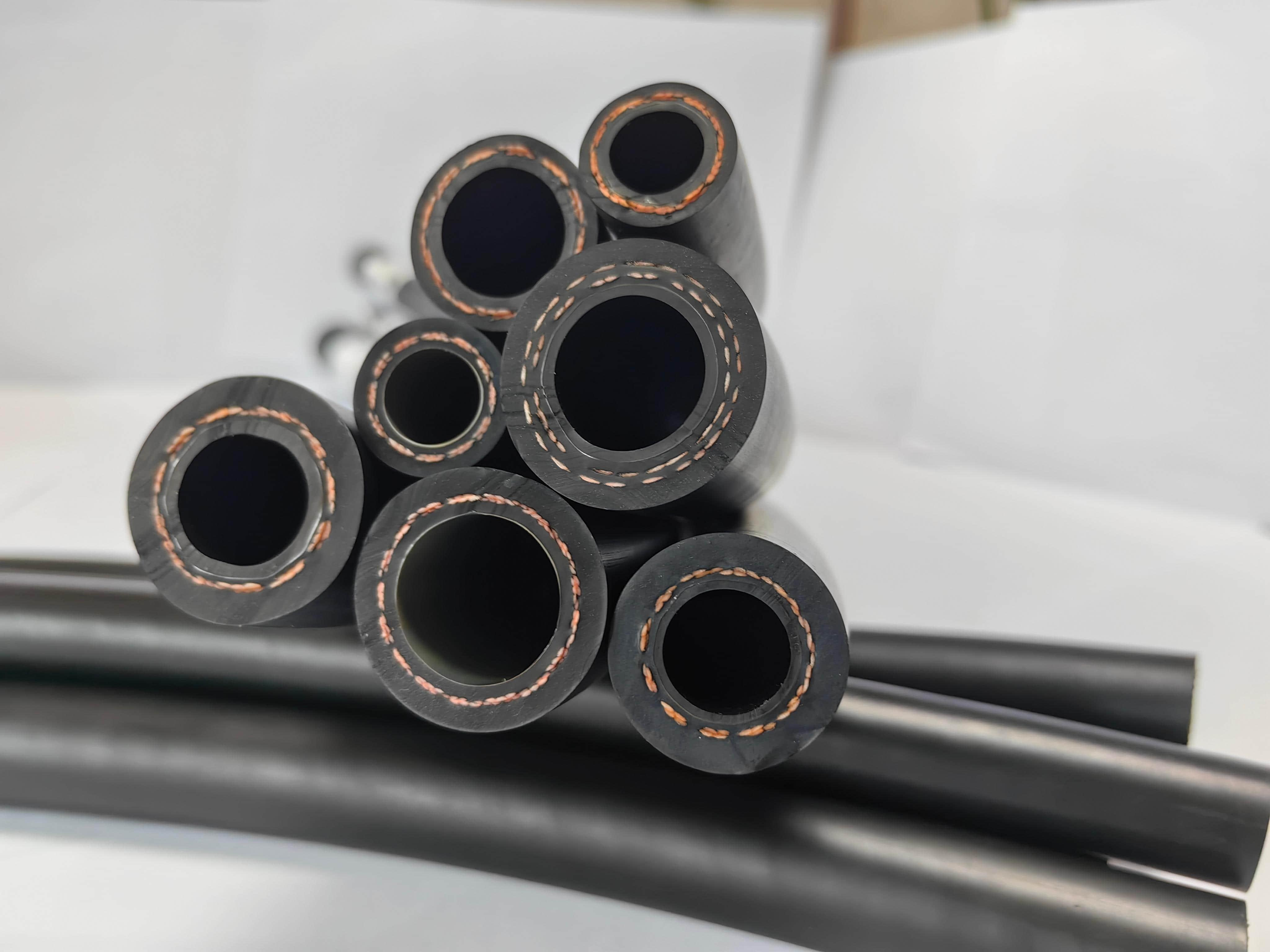
Auto AC Hose Compliance: SAE, ISO, and OEM-Specific Standards
SAE J2064 and ISO 13072 as Non-Negotiable Baselines for Bulk Procurement
The SAE J2064 standard lays out strict rules about how mobile air conditioning hoses must handle pressure cycles and prevent leaks, making sure they can stand up to bursts over 300 psi without failing. Then there's ISO 13072 which adds another layer of protection worldwide, particularly when it comes to keeping refrigerants like R-134a from escaping through the hose walls. At temperatures around 70 degrees Celsius, these standards require that no more than 15 grams per year escape, which matters a lot for environmental reasons. When we look at real world data from fleets, following both of these standards seems to fix about 9 out of 10 early failures in AC hoses. That's because they force manufacturers to maintain consistent materials throughout production runs and ensure those connections between parts stay solid. For companies buying large quantities of these components, sticking to these specs isn't just good practice but essential business sense. Parts need to work across different makes and models of vehicles, and according to industry reports from IHS Markit in 2023, proper compliance cuts down warranty issues by roughly one third.
OEM Architecture Variance: How Ford, GM, and Stellantis Define Hose Fit-Form-Function Requirements
When it comes to original equipment manufacturer specifications, there are some pretty significant variations in how hoses need to be designed and integrated into vehicles. Take Ford's WSS-M99D30-A standard for instance. It calls for really tight bend radii (no more than 60mm) because modern engines just don't have much space to work with. They also require those special axial compression fittings that make assembly go faster on production lines. General Motors takes a different approach with their GMW16217 spec. The focus here is all about standing up to vibrations, so they specify three layers of fluoropolymer barrier material plus those handy pre-charged quick connect fittings that save time during maintenance by cutting out the refrigerant purge step. Stellantis has its own set of demands too. Their PS-1100 standard wants EPDM materials that won't break down when exposed to ester-based lubricants, plus extra durable sleeves to handle wear and tear across different vehicle platforms. Mechanics who overlook these specific form, fit and function requirements often end up spending 40% more time installing parts than necessary, not to mention creating serious problems with refrigerant mixing when working on fleets with multiple makes and models.
Material & Refrigerant Compatibility: Ensuring Long-Term Auto AC Hose Integrity
R-134a vs. R-1234yf: Swelling, Permeation, and Barrier Layer Demands on Auto AC Hose Construction
Switching from R-134a to R-1234yf refrigerants has really pushed materials to their limits. Because R-1234yf molecules are smaller, they actually pass through materials at a rate 30 to 40 percent higher than R-134a does. This means manufacturers need better barrier tech just to stay within those strict SAE J2064 leak standards. Nylon alloy liners, typically between 6 and 12 microns thick, bring down permeation rates below 5 grams per year per meter of tubing. These thin layers have become pretty much mandatory in today's cooling systems. Another issue comes from how R-1234yf interacts with standard EPDM hoses. It makes them swell about 15% more in volume, which speeds up the formation of tiny cracks over time. To fight this problem, engineers now rely on multi-layer fluoropolymer constructions. These special materials use cross-linked molecular structures that keep things stable even when temperatures swing wildly from as low as -40 degrees Celsius all the way up to 150 degrees Celsius during normal operation.
EPDM, PA12, and Multi-Layer Fluoropolymer Hoses‗Performance Tradeoffs for Fleet Applications
Material choice involves balancing cost, durability, and refrigerant compatibility:
- EPDM Rubber: Offers 30% cost savings over fluoropolymers and excellent flexibility, but permeation exceeds 20g/year in high-temperature conditions, limiting its use to R-134a systems.
- PA12 (Nylon): Provides strong chemical resistance and permeation below 8g/year, though reduced flexibility increases vulnerability to vibration fatigue at fittings.
- Multi-Layer Fluoropolymer: Integrates PVDF barrier films with reinforced synthetic rubber, achieving permeation under 3g/year and surviving over 100,000 pressure cycles (validated by SAE J1708). Despite a 50% cost premium, it is the preferred choice for electric fleets using R-1234yf.
Fleet managers increasingly adopt fluoropolymer hoses for high-uptime vehicles, while EPDM remains suitable for cost-sensitive R-134a applications.
Durability Under Real-World Operational Stress: Vibration, Thermal Cycling, and Pressure Load
Auto AC hoses must endure extreme operational conditions, including engine and road-induced vibration, thermal swings from -40¬°C to 150¬°C, and pressure spikes above 45 bar during refrigerant phase changes.
ASTM D1329 and SAE J1708: Validated Benchmarks for Auto AC Hose Vibration Endurance
The SAE J1708 standard looks at how materials handle vibrations by running sine sweep tests from 5 to 500 Hz, which mimics what happens inside engines during operation. Meanwhile, ASTM D1329 focuses on material fatigue through something called accelerated axial loading. When we look at what goes wrong in real world applications, there are some clear warning signs. Components that resonate below 100 Hz have about an 83% greater chance of cracking according to Ponemon's research from 2023. And if clamps are spaced more than 200mm apart, displacement problems at highway speeds become twice as bad. Industry leaders aren't stopping there though. They pair these testing methods with actual road simulation equipment. What does this show? Multi layer fluoropolymer hoses can take around 10 million vibration cycles before failing. That's roughly equivalent to putting them through 250,000 miles of fleet driving conditions.
Accelerated Life Testing Protocols Used by Top Tier-1 Suppliers (2022–2024)
Tier-1 suppliers use a three-stage accelerated testing protocol to compress long-term wear into 12-week validation cycles:
- Thermal shock cycling: 500 cycles between -40¬°C and 135¬°C to evaluate elastomer hardening
- Pressure pulsation: 15,000 cycles at triple the operational pressure to detect blistering
- Combined environmental stress: Simultaneous vibration (50Hz RMS), thermal cycling, and refrigerant exposure
This approach identified 92% of real-world failure modes in 2023 validation programs, cutting fleet warranty expenses by $740k (Ponemon 2023). Suppliers now integrate real-world data loggers to refine test parameters annually, ensuring alignment with actual field conditions.
Scalable Procurement: Custom Fabrication, JIT Kitting, and OEM Compliance at Volume
Success in large scale procurement really comes down to three main things adaptable fabrication processes, efficient logistics management, and making sure everything complies with regulations. When dealing with mixed OEM fleets, modular production lines let manufacturers create custom hose setups that work across different vehicle types. This becomes super important when working with Ford trucks alongside GM vans and Stellantis models all running on similar platform designs. The JIT kitting approach matches hose deliveries directly to what's needed on the production floor, cutting down inventory expenses somewhere between 18% to maybe even 30% in some cases while also helping avoid those pesky refrigerant compatibility mistakes. But here's the catch nobody wants to talk about scale shouldn't come at the expense of quality control. Every big shipment needs thorough checking against those official OEM test docs covering things like SAE J2064 for permeation rates and ASTM D1329 standards for vibration testing. Top tier suppliers handle this compliance stuff digitally now, tracking batches throughout the supply chain and embedding necessary certifications right into each delivery package. Without these measures, entire fleets could end up facing major AC system breakdowns down the road.
FAQ
What are the main standards for auto AC hoses?
SAE J2064 and ISO 13072 are the key standards for ensuring pressure handling and preventing leaks in auto AC hoses.
Why is material compatibility important for auto AC hoses?
Material compatibility ensures long-term integrity of auto AC hoses, particularly when dealing with different refrigerants like R-134a and R-1234yf.
How do tier-1 suppliers ensure the durability of auto AC hoses?
Tier-1 suppliers use accelerated testing protocols like thermal shock cycling and pressure pulsation to ensure long-term durability.
What procurement strategies are effective for auto AC hoses?
Strategies like JIT kitting and modular hose setups are effective for scalable procurement while ensuring compliance and quality control.
Table of Contents
- Auto AC Hose Compliance: SAE, ISO, and OEM-Specific Standards
- Material & Refrigerant Compatibility: Ensuring Long-Term Auto AC Hose Integrity
- Durability Under Real-World Operational Stress: Vibration, Thermal Cycling, and Pressure Load
- Scalable Procurement: Custom Fabrication, JIT Kitting, and OEM Compliance at Volume
- FAQ